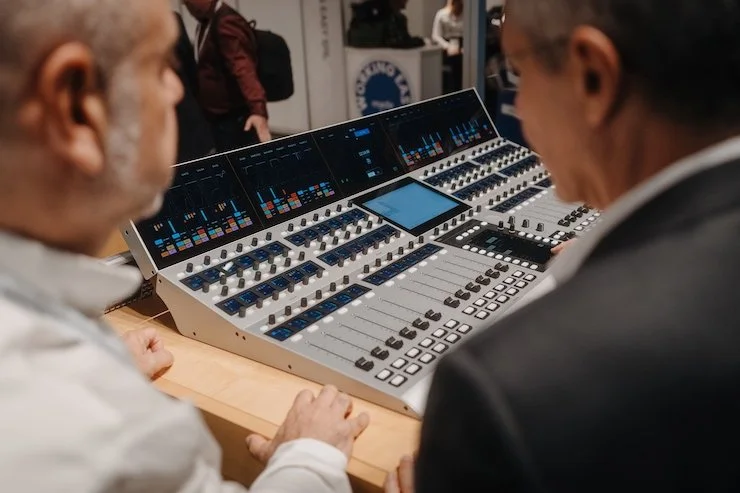
DHD has presented the MX3 modular broadcast-audio console, extending its long-standing separation between control surfaces and processing cores. Each MX3 surface module is a self-contained Ethernet device connected through one cable per console column rather than the proprietary audio, power and control link used in current Series 52 systems.
A typical surface combines a central module with six-fader expansions, optional overbridge modules and displays. Modules can be added, exchanged or repaired individually. Screen labels follow the selected view so operators can see which processing core and parameters the adjacent controls currently address.
The architecture allows one studio to control multiple processing cores or switch between them while the cores remain on air. Distributed and central facilities can use the same design, and the wider Series 52 environment supports AES67 and Ravenna, Dante and SMPTE ST 2110 for high-channel-count audio over IP.
Standard Ethernet simplifies physical integration, but the announcement does not state power delivery, switch requirements, authentication, failover, control latency, maximum surface size or compatibility with existing modules. Those details determine whether a gradual MX3 migration can preserve current operational resilience.