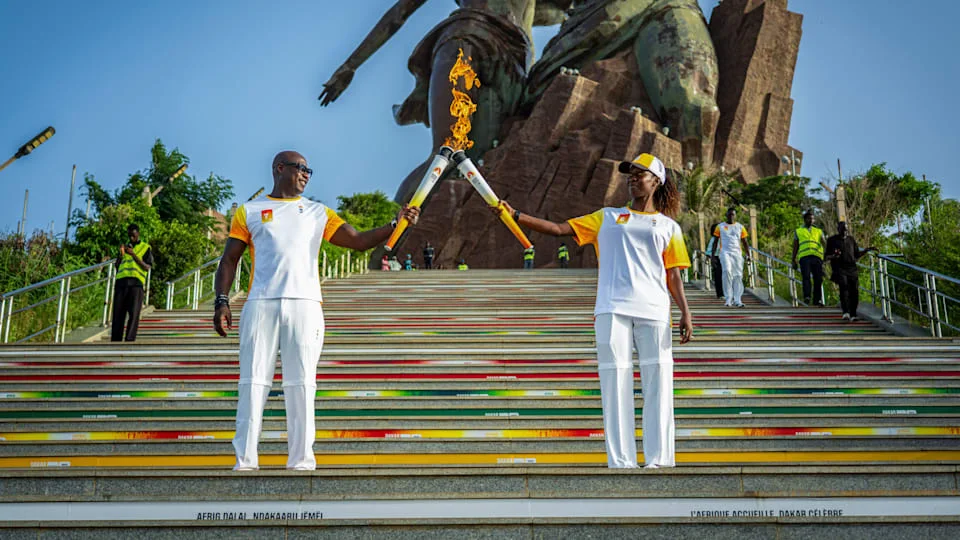
Olympic Broadcasting Services has deployed what it describes as the first fully virtualised master control room used at an Olympic event. For the Dakar 2026 Youth Olympic Games, core MCR functions run in a cloud-based, software-defined environment supported by Alibaba and operated remotely from Madrid instead of on dedicated equipment at the International Broadcast Centre in Senegal.
The distributed operation covers an estimated 507 hours in HD 1080p SDR across all 25 competition sports, with live coverage of 22. OBS lists 64 camera systems, including two drones, and 100 microphones. Of 539 host-broadcast staff, 67 per cent are based in Dakar and 33 per cent in Madrid. Remote teams handle directing, production and audio quality control for most competitions alongside commentary, logging, highlights and editing workflows.
The technical significance extends beyond moving a control room. OBS says most audio monitoring, control and QC are also managed from Madrid through software-based and cloud-enabled systems, while OMEGA operates timing, results and graphics remotely for most sports. Automated highlights cover 16 sports, and supervised AI audio mixing balances commentary against international sound. This turns Dakar into a live test of a more distributed host-broadcast architecture rather than a conventional IBC with selected remote functions.
OBS has not disclosed the virtual MCR's component vendors, media transport, redundancy design, latency targets, recovery model or measured service availability. The source also does not separate which functions run in Alibaba's environment from other cloud or Madrid-based systems. Dakar therefore demonstrates an operational deployment at Olympic scale, but it does not yet provide enough engineering detail to reproduce the architecture or compare it directly with a dedicated hardware MCR.