Wireless microphones have moved from occasional event tools to persistent infrastructure in studios, venues, education, corporate production and government spaces. At the same time, users increasingly expect the resilience and audio quality associated with broadcast systems.
That expectation collides with a more crowded RF environment. Reliable operation now depends on disciplined frequency coordination, appropriate transmission technology, antenna and distribution design, continuous monitoring and an understanding of local spectrum policy rather than simply choosing a clear channel during setup.
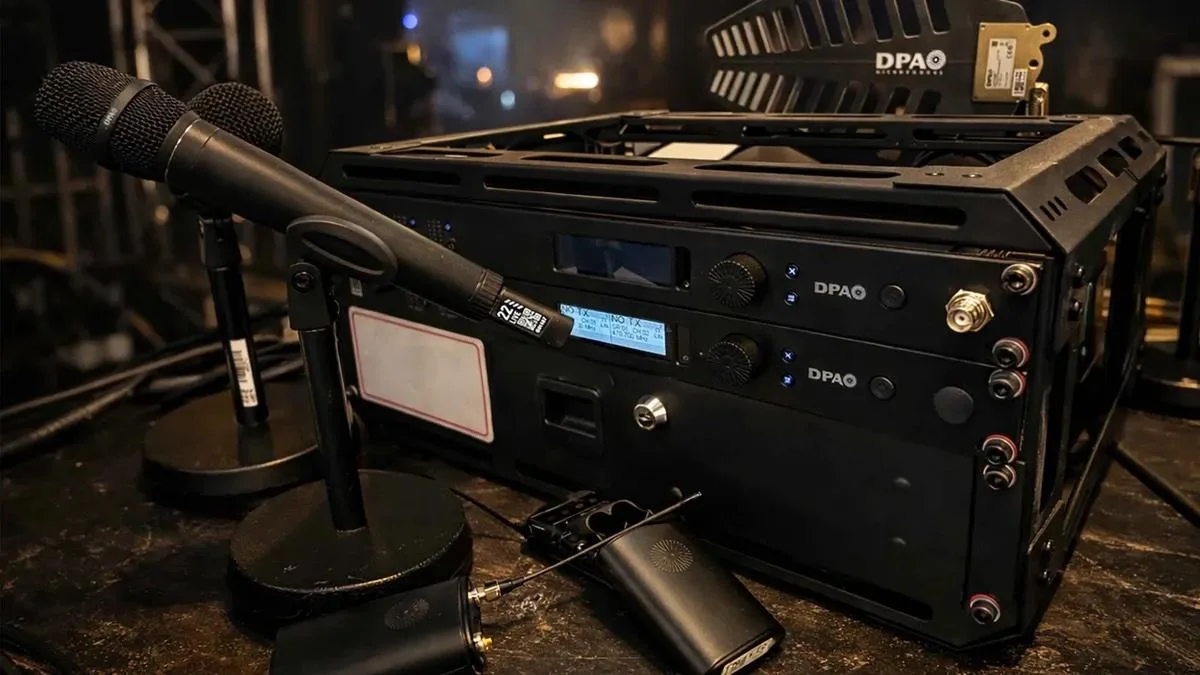
Security is also entering the engineering brief. Digital platforms such as DPA’s N-Series advertise AES-256 encryption, reflecting use cases where intercepted programme, corporate or government audio would be unacceptable. Networked management must therefore cover both RF performance and access control.
The article surveys industry concerns and supplier approaches rather than comparing systems under identical conditions. Usable channel count, range and resilience remain site-specific, and encryption claims do not replace a full review of key handling, network security and operational practice.