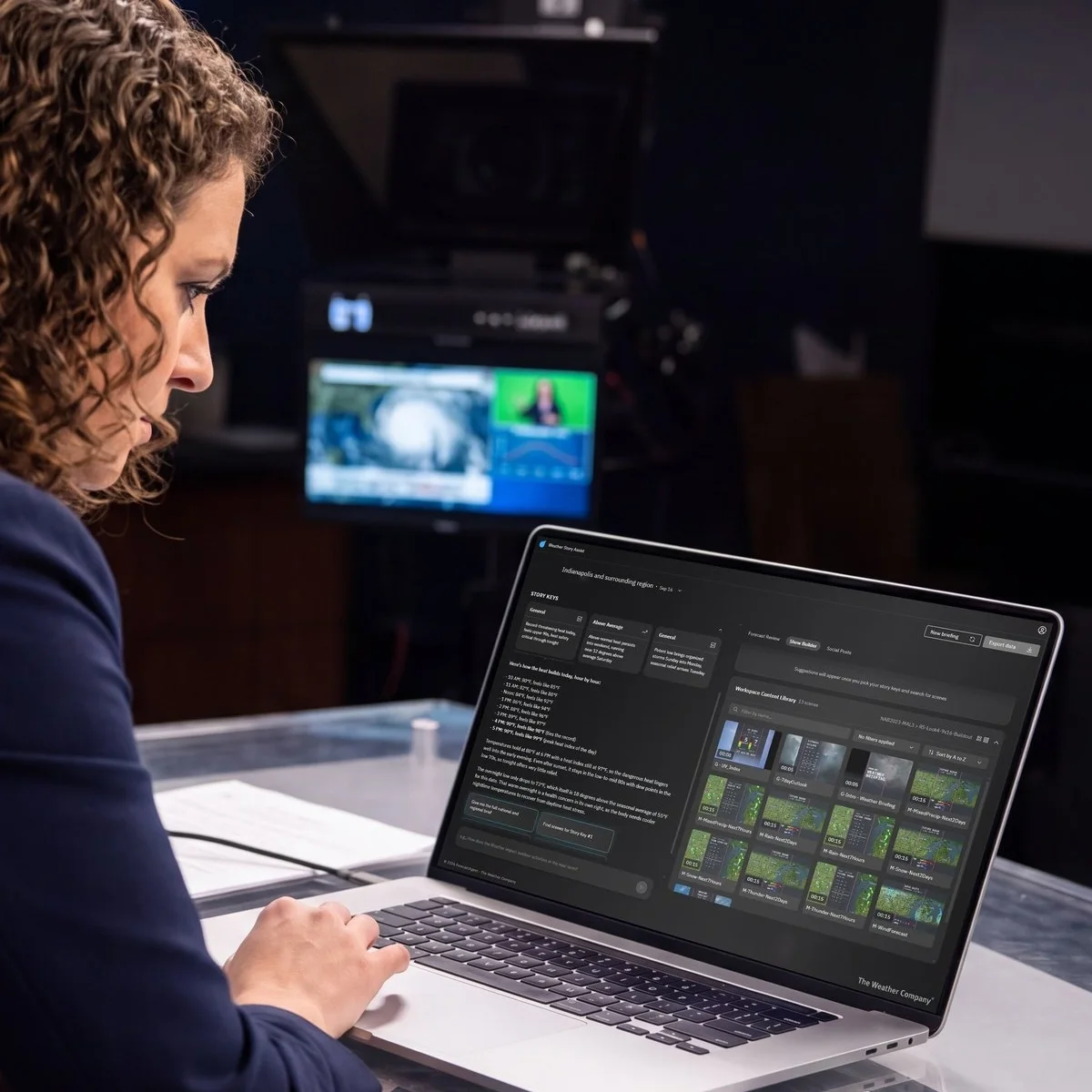
The Weather Company has made Weather Story Assist generally available as part of its Max Cloud platform for broadcast station groups. The service starts with a station's trusted forecast and proposes local story angles for linear television, streaming, web, social and mobile output. It also searches the organisation's Max Cloud library for relevant scenes, graphics, archived video and local material rather than treating text generation as an isolated newsroom task.
The technically important design choice is provenance. The company says historical material, records and suggested angles are traced back to their sources, while every proposed story and media asset must remain visible to the meteorologist. No content is meant to air or publish without explicit approval. The service operates inside a station group's private Max Cloud environment and is described as learning from that group's own content, brand guidance and usage patterns without training across customers.
That architecture addresses two recurring broadcast-AI risks: separating generated copy from the evidence behind it and allowing automation to bypass editorial control. Weather Story Assist also points toward a shared context layer. The Weather Company is participating in the IBC Accelerators work on the Story Object Model and says the product is being designed to support SOM integration across newsroom systems. It does not claim that this interoperability is already deployed.
Several operational questions remain open. The announcement does not identify the underlying models, publish accuracy or hallucination tests, define retention controls, or explain how source permissions propagate when archived assets are adapted for another platform. Pricing, deployment requirements and integration depth with existing NRCS and graphics systems are also undisclosed. Planned functions such as cross-market sharing, three-tier personalisation and automatic vertical-video adaptation should therefore be treated as roadmap items, not current capabilities.