On Air 2026 used the Media eXchange Layer, Time-Addressable Media Store and Time-Addressable Data Store in a live 24-hour production rather than a laboratory demonstration. TVBEurope reports that the five-channel student broadcast connected Appear's processing workflow to a Norsk remote gallery through MXL. Appear's X5 supported incoming cameras, its VX platform handed media to a simple Norsk switcher, and operators selected sources for the Film channel.
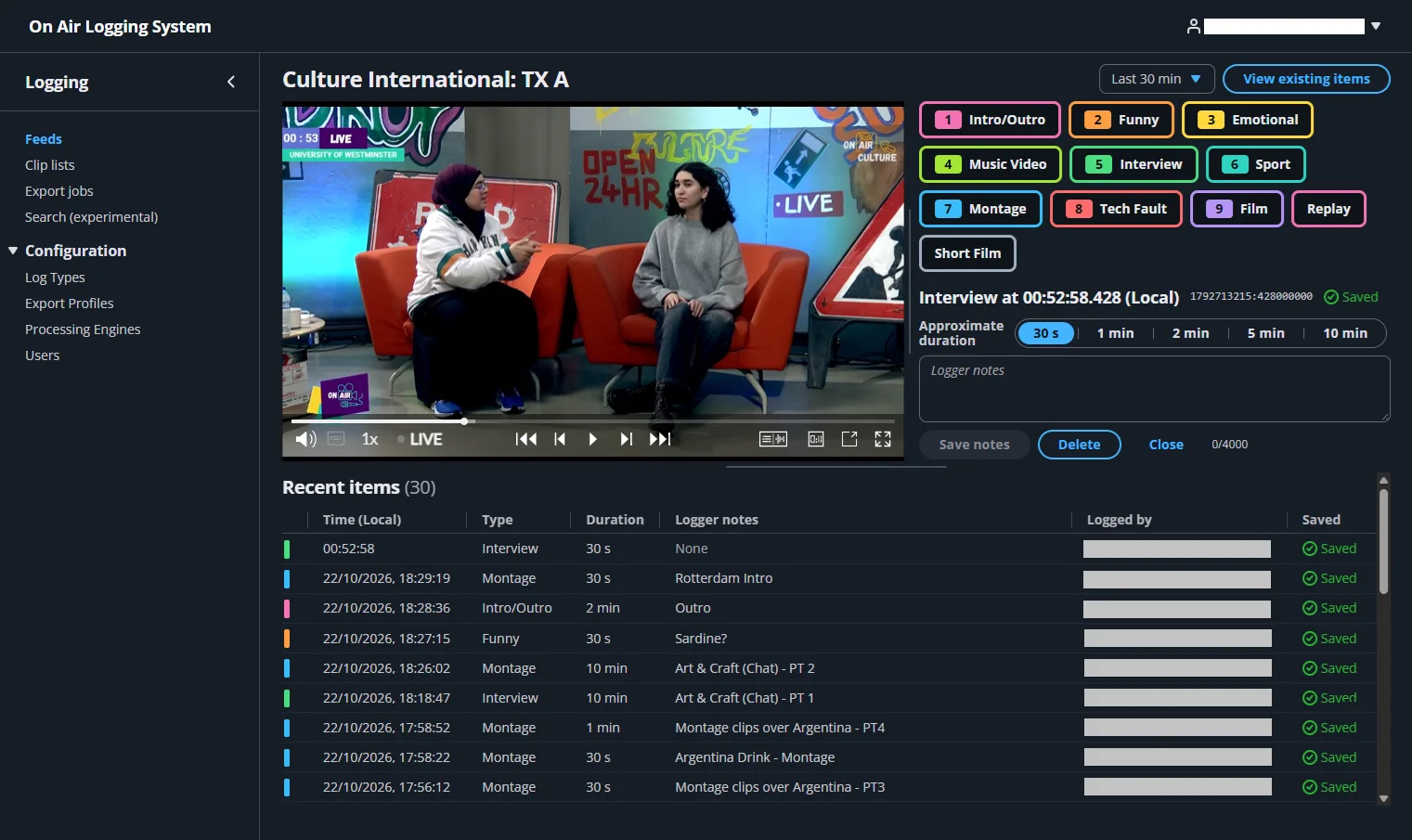
The production also recorded all five channels into TAMS. A logging interface let operators watch live feeds and attach notes, with the resulting time-based metadata written to an AWS-built implementation of the BBC R&D TADS draft. Separate analysis used media from TAMS to generate transcripts, visual descriptions and summaries that were written back into TADS. Editors and social teams could then find clips and export material without interacting directly with the underlying storage specifications.
AWS MediaConnect Router handled 25 university feeds in their local regions and moved selected sources across the AWS backbone. Together, the workflow shows how live routing, in-memory media exchange, timeline-addressable essence and editable metadata can be assembled as separate services. The important step is not simply cloud hosting: Appear and Norsk exchanged live media through an open layer while TAMS and TADS gave downstream tools shared time references.
Measured performance remains unpublished. The report does not provide end-to-end latency, MXL buffer behaviour, failover results, bandwidth, instance types, cost or error rates across the full day. TADS is still an early specification, and the production does not establish that every component is ready for unattended broadcast use. Those operational details will determine whether the same pattern scales from a collaborative event into routine channel production.