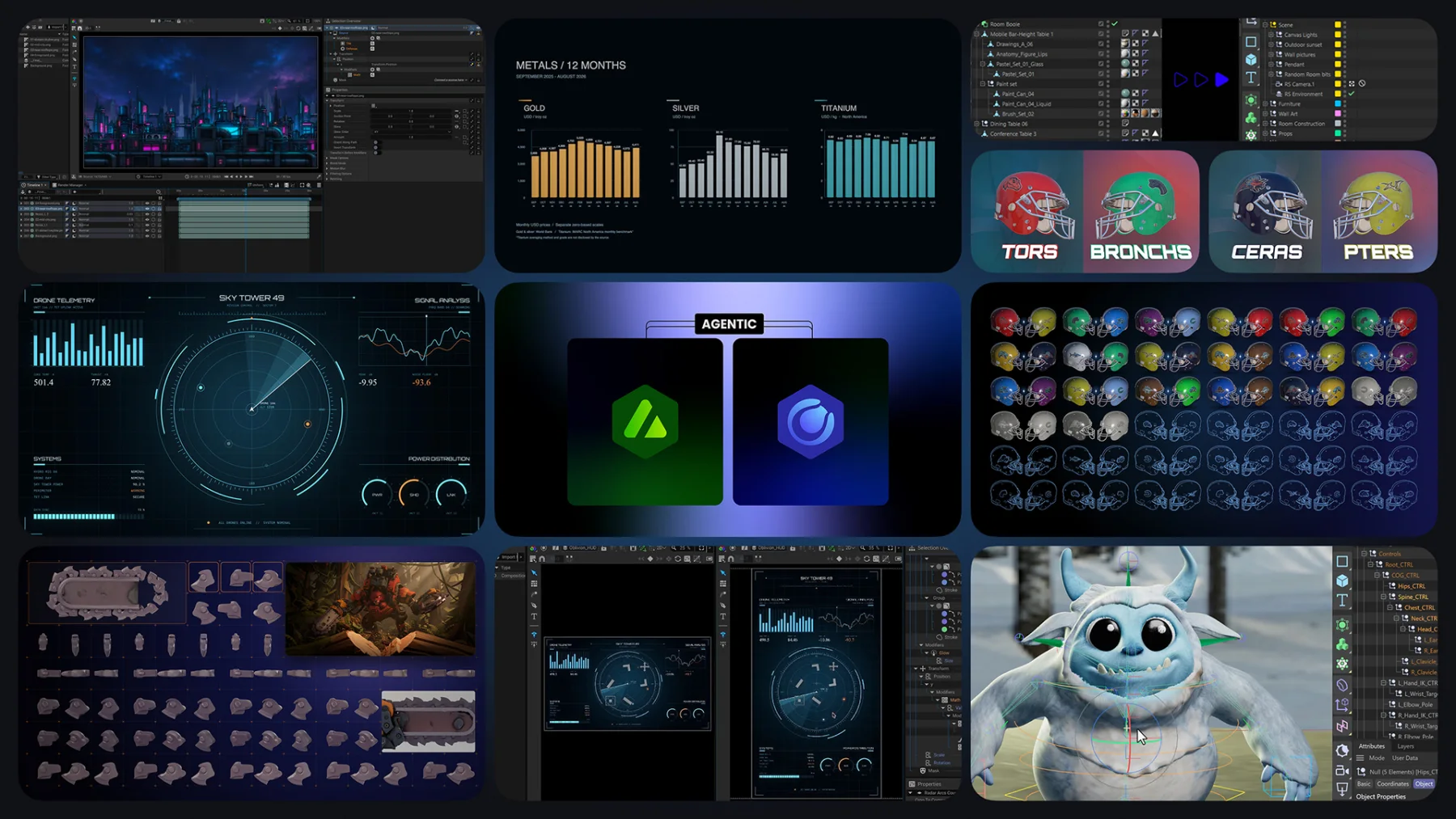
Maxon has launched separate Agentic licenses for Cinema 4D and Autograph, moving its Model Context Protocol integrations beyond interactive control of an artist's open application. Each license permits an AI agent to run one headless copy of the selected application in the background, locally or remotely, while the artist continues working in the primary instance. The headless applications ship in the standard installers rather than as separate downloads.
The Cinema 4D license includes Redshift rendering and is intended for jobs such as preparing scenes, checking project settings and producing controlled variations from an approved setup. Autograph applies the same model to motion graphics and compositing. Maxon says artists can pass instructions through a supported AI client, receive project files or previews, inspect the result in the normal application and then request revisions.
The release creates a clearer licensing route for parallel agent-assisted graphics work. Cinema 4D Agentic starts at $49 per month and Autograph Agentic at $29 per month for named users and teams. A regular Cinema 4D or Maxon One license is not required to buy the headless license, although a normal application license is needed when an artist wants to open and refine the returned Cinema 4D project. One simultaneous headless process requires one Agentic license.
Maxon has validated Anthropic Claude Code plus OpenAI ChatGPT and Codex as clients, while other MCP clients may connect without Maxon's validation. The company also warns that connected AI tools can read an entire project and may transmit it under the provider's own data terms. Maxon has not published production benchmarks, task-level permission controls, audit-log details or reliability results for unattended jobs, so studios still need to validate security, repeatability and output quality in their own pipelines.