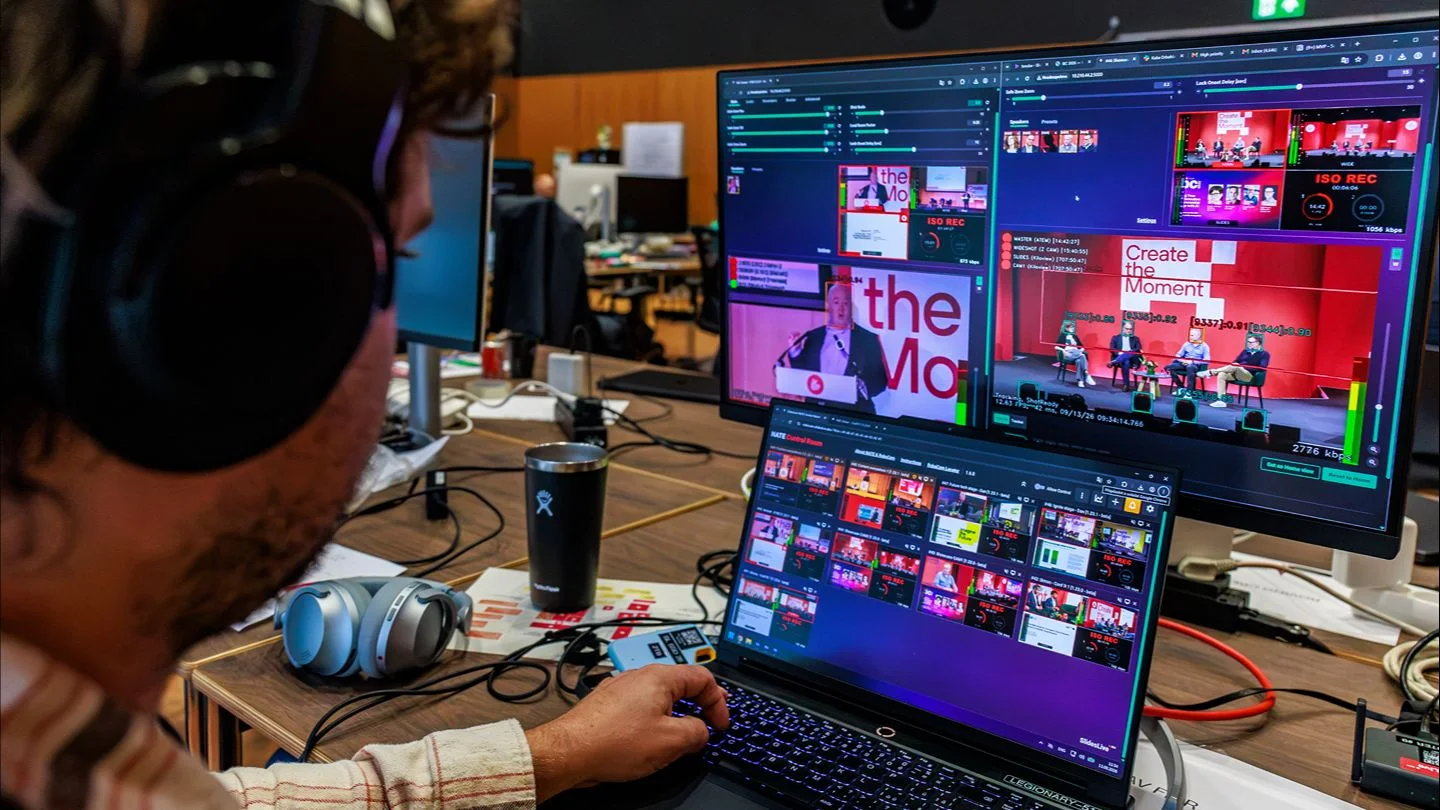
IBC’s video team used a remote-first production model for IBC2026, placing remotely operated PTZ cameras across seven conference and show-floor locations. Sessions were captured at the RAI in Amsterdam and transferred to a team in Prague for editing.
Finished edits then returned to the editorial team in Amsterdam for final review and publication. IBC says the model covers hundreds of hours of session video and reduces the need for on-site edit suites, which are constrained during the show.
The division of work lets local camera crews concentrate on live and unscripted material, breaking stories and highlights. It also makes the production a practical example of how capture, editorial review and post-production can be geographically separated without removing human approval at publication.
IBC has not disclosed the camera, contribution, storage or editing stack, nor transfer bandwidth, turnaround targets or contingency design. The reported workflow establishes that the operating model was used, but not how it performs during network loss or whether all seven positions share the same redundancy.