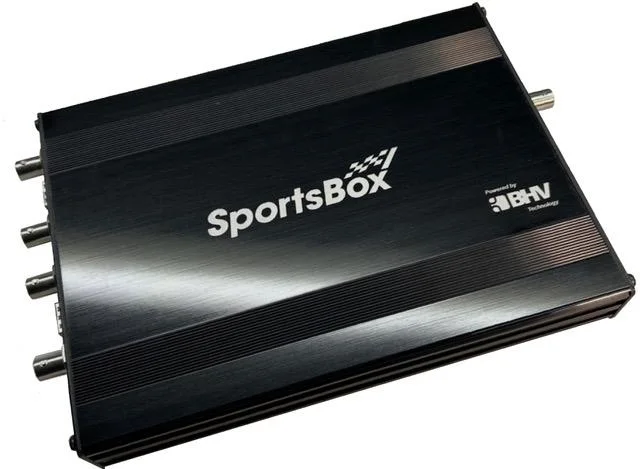
BHV has moved its SportsBox compact remote video switcher from development into production. The company says the unit weighs about 900 grams and accepts four camera feeds, producing a switched 4K output at up to 60 frames per second with 4:2:2 colour sampling.
The design aims to reduce contribution bandwidth by switching at the venue and sending one programme output over a 5G or COFDM connection. That differs from a fully remote workflow in which every isolated camera feed is transported to a central production hub.
Why it matters
For lower-tier sports, training grounds and fast-moving field production, carrying four independent contribution paths may be financially or technically unrealistic. A small local switcher can preserve UHD quality while reducing modem count, airtime and backhaul complexity. The trade-off is that editorial decisions happen at the edge unless separate recordings are retained.
Weight and power are important for wireless camera teams, but so are operational controls. Producers will need to understand tally, return video, intercom, audio handling, remote control and recovery after a network interruption. A single contribution link also concentrates risk even when it simplifies the field kit.
What remains open
The report does not specify shipping volume, pricing, full latency or how isolated camera recordings are protected. Those details will determine whether SportsBox is best treated as a niche field appliance or a repeatable remote-production building block.