Origami Platform has expanded its post-production workflow system with Collections, unified audio-and-picture conforming and a native Model Context Protocol interface. The release is designed to reduce repeated file handling between storage, editorial and delivery stages.
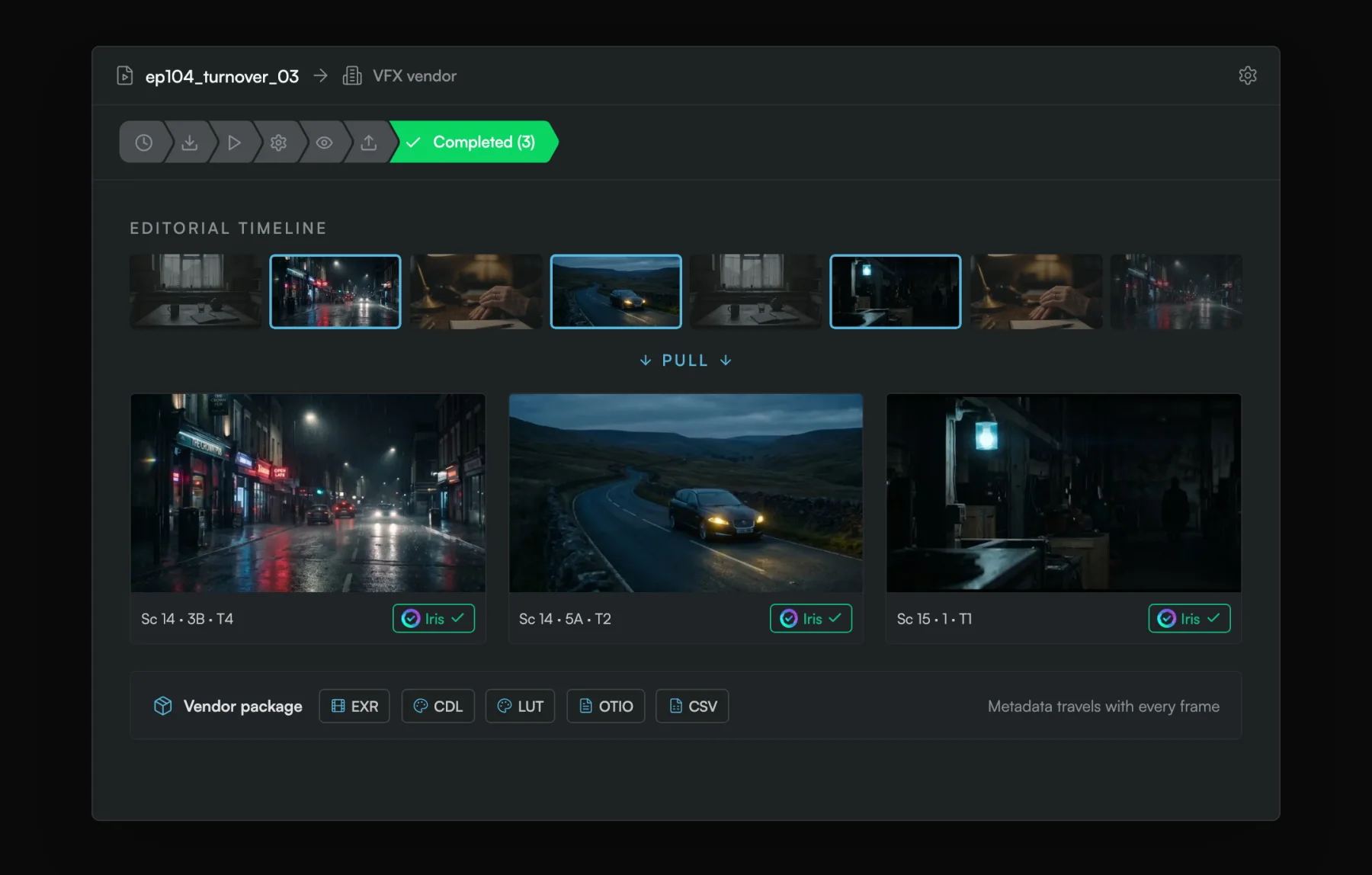
Collections can search across connected storage and package the same selected media into different delivery structures without physically reorganising files for every hand-off. For conforming, a single EDL, AAF, Final Cut Pro XML or OpenTimelineIO file can drive both picture and audio assembly in one Origami job.
The audio workflow uses UMID matching to associate multi-file production recordings with picture, then produces a unified and properly labelled master clip. Lossless trimming now covers ProRes variants, Avid DNxHD and DNxHR, MXF OP-Atom, Panasonic AVC, Canon RAW, Blackmagic RAW, Phantom/Cine and BWF or WAV production audio.
Native MCP support exposes platform metadata to compatible AI agents through a conversational interface. The announcement does not identify access-control boundaries, supported agent hosts or audit mechanisms for those requests. It also provides no independent timing data for large conforms, so facilities will need to test both metadata governance and throughput before relying on the new automation in production.