German regional broadcaster münchen.tv has rebuilt its production centre in northern Munich around a distributed Riedel media layer rather than a single central router. The facility is part of Localism Media's plan to centralise more technical and administrative work in Munich while leaving editorial production with münchen.tv, tv.ingolstadt and L-TV in their respective regions. The stated goal is to share production resources now and connect more locations later.
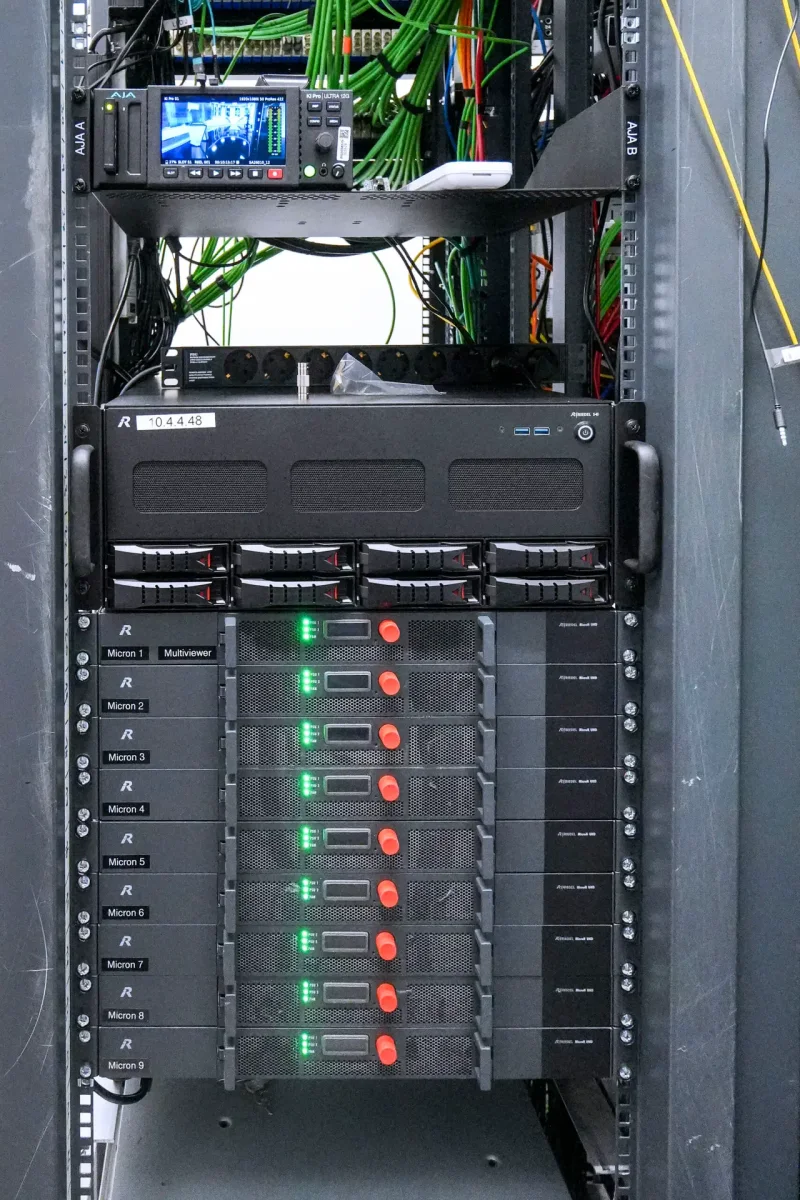
Thirteen Riedel MicroN UHD nodes distribute and route video, audio and data across the centre, while Dante carries audio. Production teams can recall predefined routes from a dashboard and adjust them when internal sources or outside feeds change. The practical shift is architectural: signal access is spread across networked endpoints, so the broadcaster can expose common resources to several control rooms without organising every path around one monolithic crosspoint.
Communications run through an Artist-1024 matrix, ten SmartPanels and a Bolero wireless system with 16 beltpacks and two antennas. One antenna also supports Bolero Standalone and Pro applications for mobile work. Two SimplyLive ViBox servers and two Venue Gateways form the basis of a redundantly configured third control room, adding live switching, replay and remote-production capacity. Three SKAARHOJ camera-control panels and ARRI studio lighting complete the disclosed production layer.
Riedel confirms the component counts and intended workflows, but the announcement does not publish link speeds, aggregate signal capacity, the compression or transport formats in use, the network topology, or measured failover times. It also leaves the timetable for connecting Localism Media's other regional stations open. Those omissions matter when judging resilience and scale, but the disclosed design still shows how a regional broadcaster can separate shared production resources from the physical location of each editorial team.