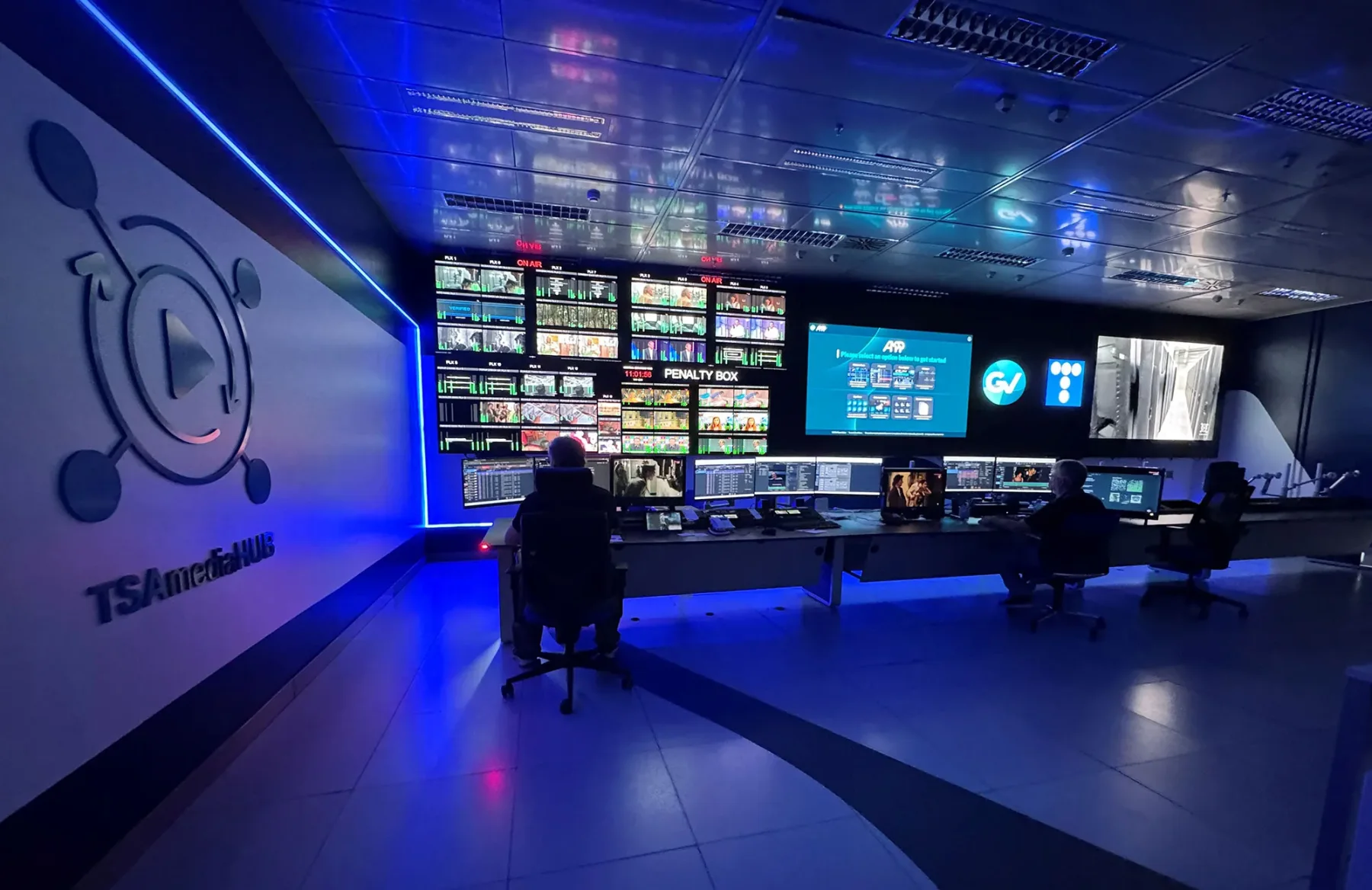
Telefónica Servicios Audiovisuales has put 20 Movistar Plus+ linear channels into production on a software-defined Grass Valley AMPP environment. The migration replaces part of a hardware playout installation that had supported the Spanish platform for more than two decades. Grass Valley says the target architecture is designed to support almost 60 services, while TSA is still assessing the requirements of roughly 40 additional channels.
The deployed system runs Playout X across 13 AMPP servers and uses two dedicated Framelight X servers for media management. Main and backup operation provide full redundancy across the first channel group. Inputs and outputs use SMPTE ST 2022-2 transport streams, and the shared software architecture separates channel services from fixed physical chains. Movistar Plus+ handled integration with its traffic, graphics and other third-party systems.
This is significant because it documents a production migration rather than a product demonstration. TSA moved the initial channels while existing services remained on air, creating a staged route from a long-lived hardware plant to pooled compute. The platform remains on premises today; Telefónica is only exploring cloud disaster recovery. That distinction matters when evaluating where software-defined broadcast infrastructure is actually running and where cloud operation is still a plan.
Grass Valley has not published server specifications, channel density per node, failover timing, recovery objectives or measured service availability. The release also does not identify the first 20 channels, their output formats or how live-source services will change the next phase. Cost, power use and operational staffing are undisclosed. Those figures will determine whether the remaining migration delivers efficiency beyond the flexibility already reported by TSA.