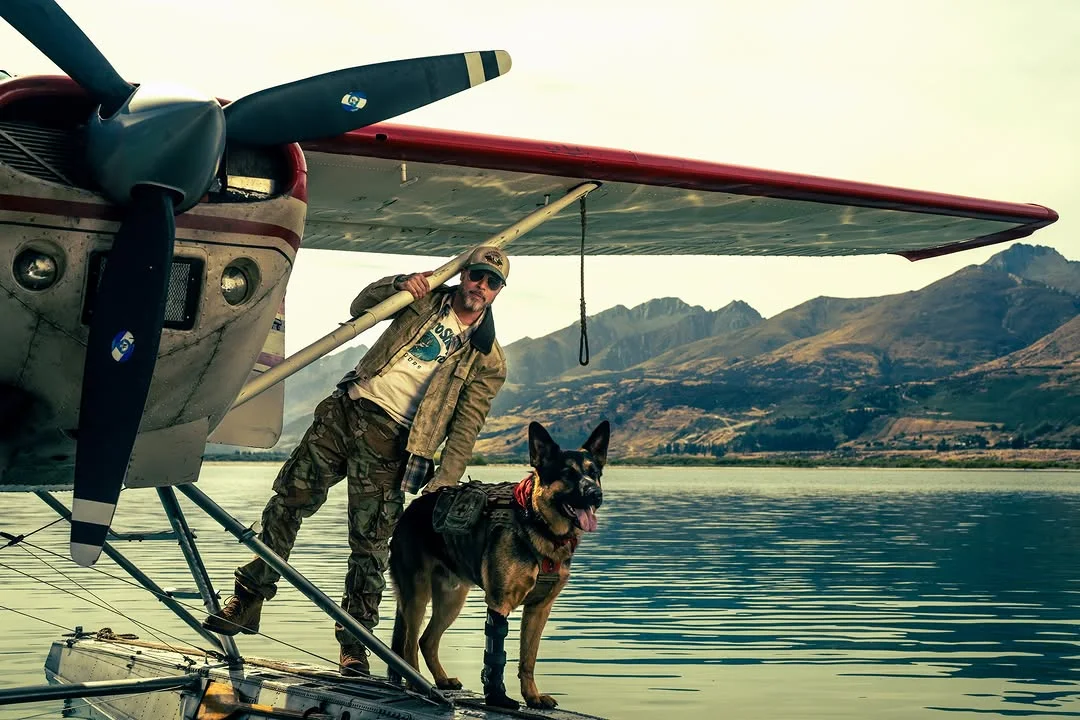
Heart of the Beast used a hybrid production workflow to make New Zealand locations stand in for Alaska while preserving the film’s location-shot character. For a dangerous tree-bridge sequence, the team reached a remote river by helicopter and on foot, then captured it with LiDAR, photogrammetry and drone photography.
Production design used the scan to design a bridge that fitted the real landscape and to 3D-print rocks for a matching backlot build. The real river could therefore remain part of the finished image while actors worked on a controllable set. Creature scenes used physical puppets to give performers, camera and lighting departments a moving reference, followed by Framestore’s procedural anatomy, muscle and fur tools.
Unreal Engine supported post-visualisation and rapid discussion with the director. The important production lesson is that spatial data moved in both directions between location capture, set construction and VFX, reducing the gap between physical and digital departments.
The case study confirms techniques and creative intent, but not scan resolution, data volumes, render cost, schedule savings or the proportion of shots requiring digital replacement. Framestore supplied the workflow account, so efficiency claims remain qualitative.