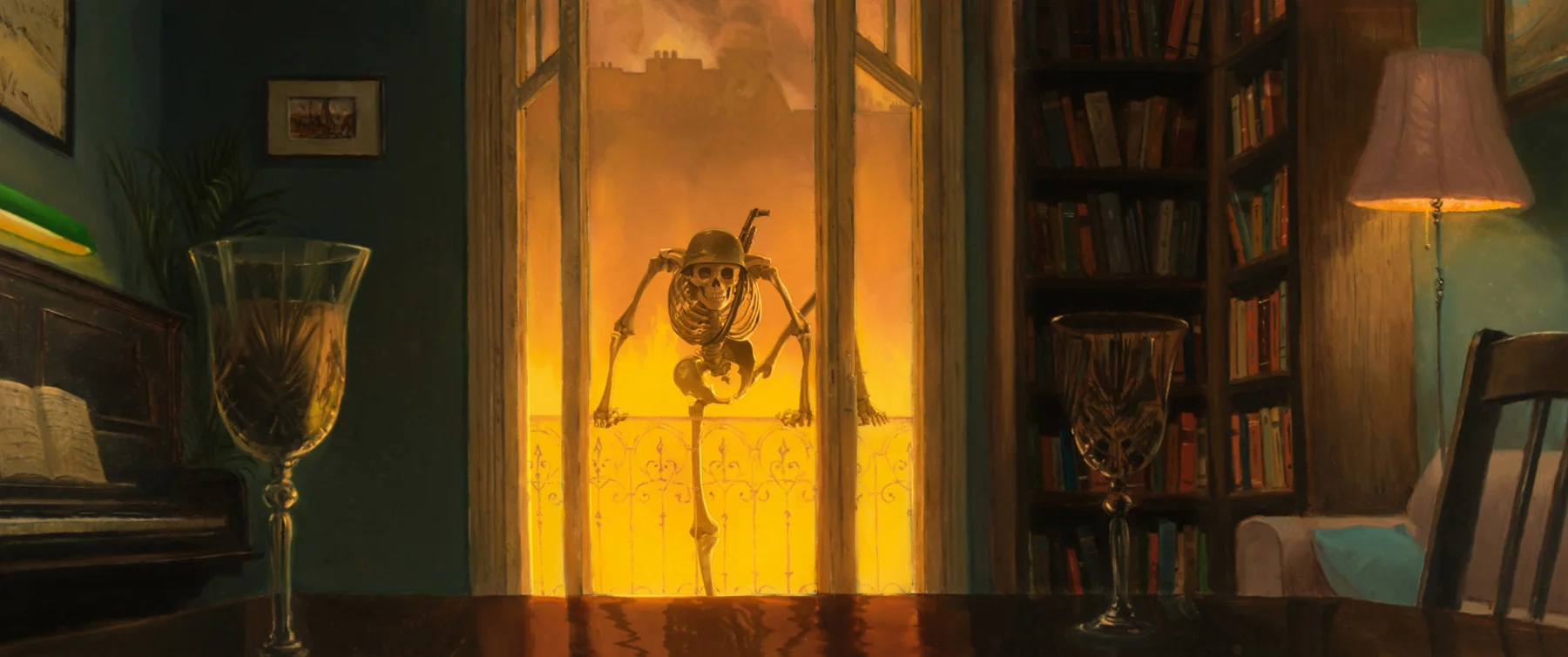
Director Hisko Hulsing built the five-minute animated film Danse Macabre around 79 oil paintings and a complete live-action version performed before animation began. The reference footage was edited in DaVinci Resolve, fixing performance timing, musical synchronisation and shot length before 30 artists in four countries started final work.
The distributed team used Kitsu for shot publication, notes and approvals, while work-in-progress shots were inserted into the Resolve timeline. That kept the evolving animation measured against the same editorial spine instead of allowing each department to drift from the approved cut.
AI was used narrowly for painterly texturing. Blender and Houdini supplied depth, edge and beauty passes; complex scenes were split into smaller parts for ComfyUI, Stable Diffusion and AnimateDiff, then rebuilt and retouched frame by frame in TVPaint. Fusion Studio retained 3D metadata for compositing and lighting adjustments.
The published account is a production case study, not a controlled quality comparison. It confirms the tool chain and human review steps but does not disclose model training data, compute cost, rejected outputs or time saved against a fully manual pipeline. The result therefore supports a reproducible workflow pattern, not a general claim that diffusion reduced production effort.