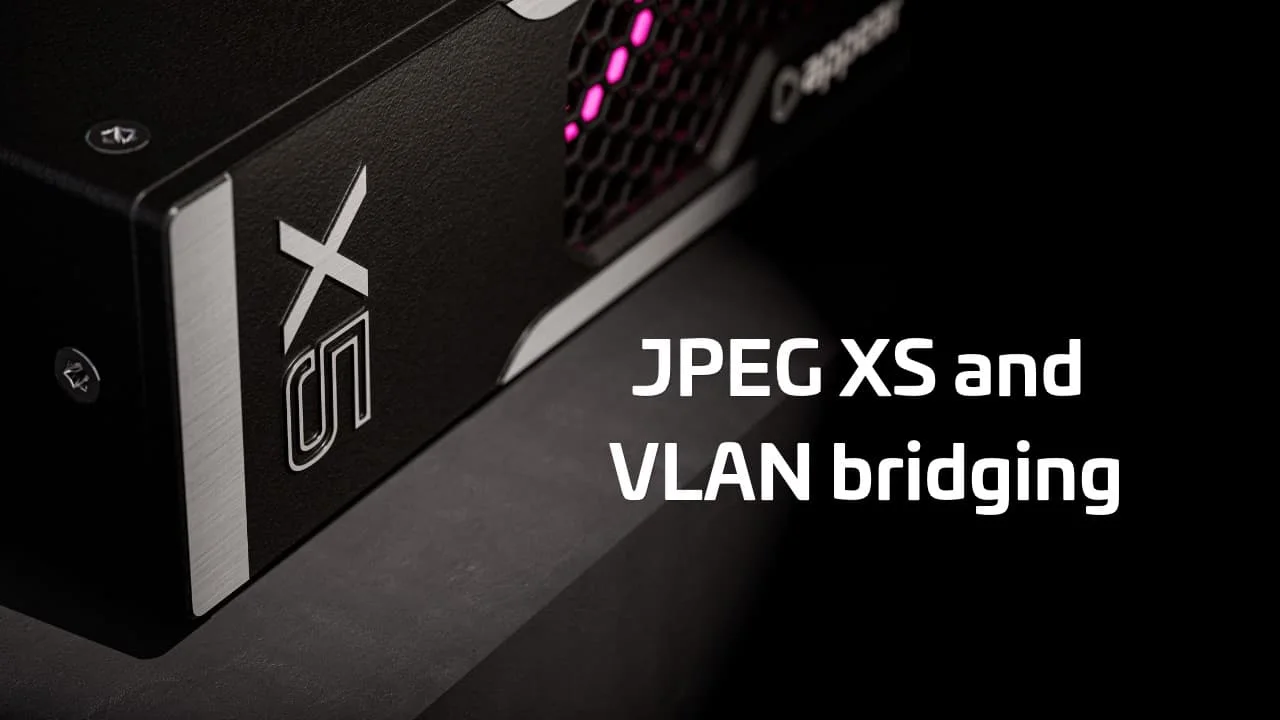
Appear has added JPEG XS and VLAN bridging to the X5, its half-rack contribution platform combining encode, decode, SDI, IP and audio functions. JPEG XS is implemented as a supported operating image on the existing hardware rather than an external module. Crews can therefore prepare an X5 for low-latency JPEG XS work or load the AVC/HEVC image for more bandwidth-efficient contribution.
The choice is exclusive at unit level. An X5 running the JPEG XS image does not process AVC or HEVC until the operating image is changed, and the reverse applies to an AVC/HEVC unit. That limitation matters when planning small kits: the update removes the need for a different codec appliance, but it does not turn one chassis into a simultaneous three-codec pool. Operators must decide which role each unit will perform before a production.
Optional VLAN bridging addresses a separate field-network problem. The X5 can take traffic for a configured VLAN from its uplink, strip the VLAN tag and present that network on a local port for a laptop or monitoring tool. Return traffic is tagged again automatically. This can eliminate a managed switch in a fly-away or ENG kit, but enabling the bridge repurposes the port normally used for HDMI monitoring. Permanent installations with established switching and local HDMI monitoring may gain less from the feature.
Appear confirms both functions and their operational trade-offs, but its product note does not specify supported JPEG XS profiles, resolutions, channel density, latency measurements, licensing terms or the software version that introduces them. It also does not publish VLAN throughput, redundancy behavior, security controls or a qualified-device list. Engineers should verify those details and rehearse image changes before assigning the same X5 to alternating JPEG XS and AVC/HEVC productions.